
Heavy Weather

Reflections from 6 months aboard and 3 months at sea

Its Canada Day in Channel Port aux Basque. We arrived yesterday morning from Iles de-la-Madeleine (the Magdalen Islands, Quebec), completing our third offshore passage and fourth overnight sail. It had been foggy until 9:30pm, finally lifting to reveal a clear sky complete with a “strawberry moon,” full and pink, and the sky littered with stars. I
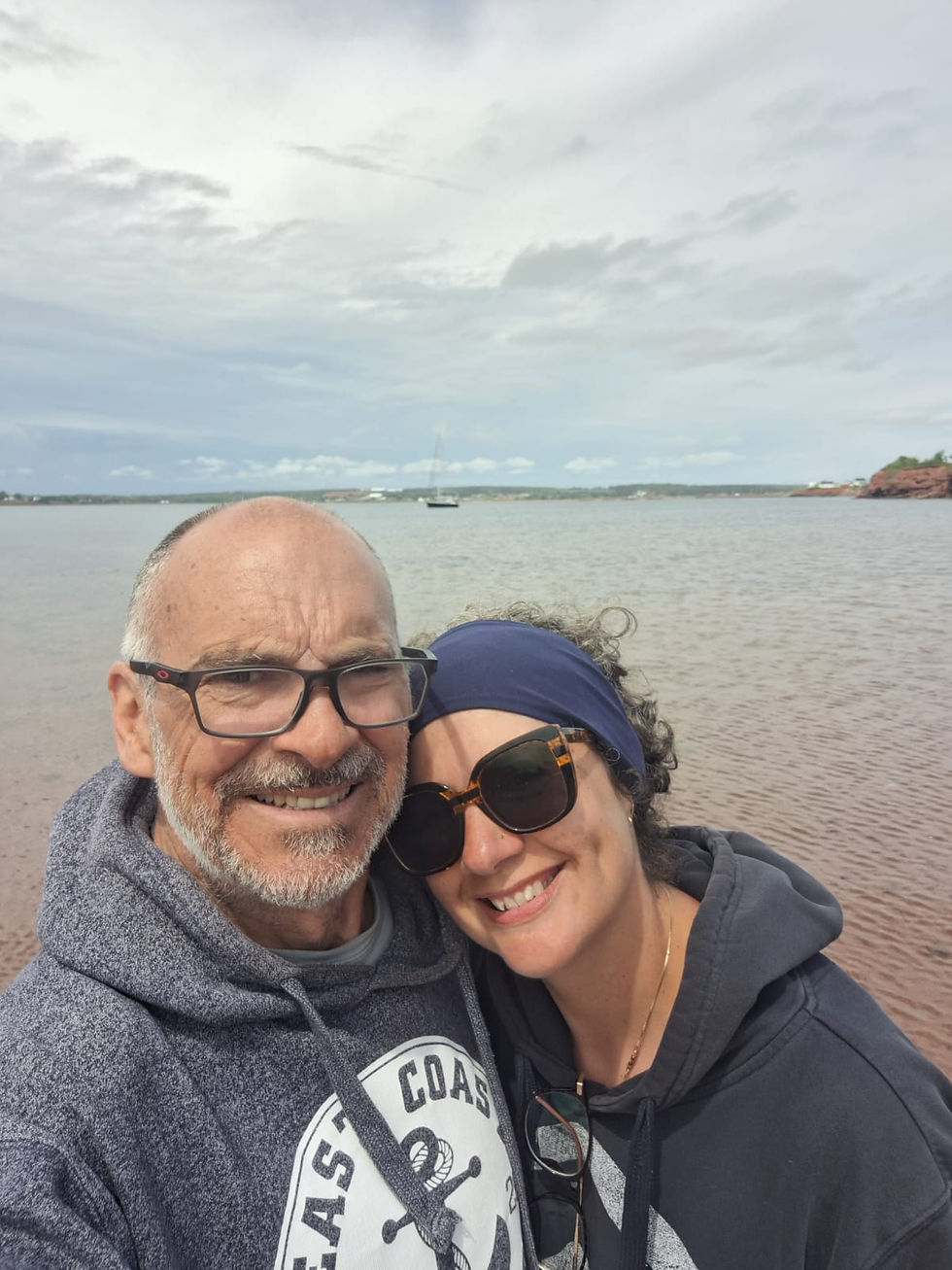
was pleased with myself for identifying Arcturus off our stern, one of the only stars I can identify. I hope for more nights where I can break out my stargazing book and learn more about the night.
July 9th will mark six months from moving aboard Sea Fire. Six months since we stood on the dock, stared at her, and wondered "what have we done?" Two and a half months later we were finally sailing and June 21st marks our 3 month anniversary of departing Westbrook, Connecticut. We have sailed 1400 nautical miles in that time. Have we passed our probationary period? Are we actually sailors now? I’ve been thinking back to our time onboard over this half year and reflecting (a very social-worker thing to do), on experiences and lessons. Fog on this last night passage brought me back to our first night sail from Boston to Portland, MA, and how the experience made us better sailors.
April 16/17, 2026
Night sail from Boston to Portland, ME
Fog. Of all things, why fog? Our first overnight passage on Sea Fire and at midnight I was alone on watch and it was pea soup outside. This was my second overnight sail... ever, and the other time I was paired up with the professional skipper due to my inexperience. This time we were alone on Sea fire, headed to Portland, and all I could see was the occasional lobster trap buoy slide by - too close - but I hadn't seen them in enough time to dodge them.
We had been motor sailing most of the night with one reef in the mainsail and the engine propelling us forward. 4 knots of wind just isn't enough to move this girl. By 12:30am the wind had picked up to 10 knots, enough to put out the headsail and cut the engine. Jean was scheduled to take watch at 1am and I decided to wait until he got up to the cockpit so we could change the sails together. We had only been on the water a few weeks and I hadn’t yet learned how to change the sails myself. We weren't in a rush and 30 minutes wouldn't make any difference. I was feeling alright at the helm, if a little spooked from the fog, but I knew my watch was over soon and I was looking forward to sleeping.
Ten minutes later I felt the wind puff on my face before it registered on the display. In moments it had gone from 10kts to 15 knots and it was climbing. Jean was up and moving around and I called to him,
"Hey hon, I need you up here" I was a bit stressed but not alarmed, that said, I wanted him next to me.
The wind kept climbing. 18, 20, 23kts, 25.
More urgently, "Jean I really need you up here!" It had been 45 seconds since my first request for him, not enough time to don his foul weather gear that was 100% necessary in the humid 5 degree air.
Jean came up through the companionway as the wind peaked at 36 knots, increasing a total of 26 knots of wind in 2 minutes. We had hit a squall.
It was howling and had brought rain with it, pelting us horizontally. With no time to build up waves the sea was flat, but the wind was so intense it created a layer of foam on the water and it was white in the dead of night. Squalls are notorious for shifting winds and Sea Fire, being only powered by a bit of throttle and the main for some lift, began being pushed around by the wind and we lost steerage. The wind caught the bow and pushed, beginning a spin. Jean had taken the helm and I was ready with the lines, not knowing how to help. The boat turned 90 degrees and we couldn't tell which way it was coming from or even where we were facing.
"Were going to gybe!" I saw the main begin to backfill and then the wind caught it from the rear. The boom slammed over under the force of a 3/4 full main. Thankfully it didn’t have far to go, when motor sailing we have the boom in pretty tight.
We span around again, unable to grab control of the boat. It felt as if we were just along for the ride on a terrifying carnival ride. The bow went through the wind again, tacking, and then around through another gybe, slamming the boom over. I pushed the throttle down to get more speed while Jean wrestled with the wheel. With more speed the wind wasn’t able to push the bow as easily and Jean regained control. The wind had come down a little, but it was still blowing like stink and raining sideways. We couldn’t see anything and it was so loud we were yelling to communicate.
“We need to get the main down!” I called over the deafening noise of wind, rain and waves. We tried to get the boom in a good position to bring the sail down, but our inexperience showed and we were unable to do so. With our setup, if the boom isn’t at the right angle to the mast the sail won’t go down properly.
“We can’t!” Jean said, “the boom isn’t in the right position!”
“It doesn’t matter! That sail needs to come down!” I wouldn’t take no for an answer. The only concrete knowledge I had of heavy weather was that being over canvassed is when trouble happens. Too much sail out and the boat can’t bear the forces being put on it. Masts snap, sails tear, equipment shatters… every fiber of my being said that bringing the sail down was the right thing to do.
We set the lines and winches up to furl the sail (roll it into the boom like a carpet), began lowering it, and about halfway down the line slipped off the winch. Something was wrong. We tried raising it again – gently – and then lowering it, but it wouldn’t budge. Jean went up to look and the sail was jammed against the mast. Certainly something that could be fixed, but not in a gale.
Half the sail up would have been a perfect amount for that type of wind, but being jammed against the mast with constant pressure from the wind could easily cause damage to the canvas. We turned on the autopilot and manually lowered the sail by slowly releasing the halyard (rope) from the cockpit and draping the sail over the boom. 5’ lengths of line lashed the sail to the boom where it couldn’t flap around.
Back to the cockpit.
The wind had slowed to 15knots, the rain had stopped, and the skies had cleared. We sat next to each other, slowly coming down from the last 15 minutes of action. I leaned my head on his shoulder as we held hands. On the horizon we could see lightning highlighting storm clouds and we heard thunder. A few tears began to fall as I sat there feeling helpless, overwhelmed, and completely out of my depth.

We motored the rest of the way to Portland and anchored without incident in the morning. We unjammed the sail and inspected it. The jammed section was stretched and had some torn stitches, and there was a tear along the mast edge of the sail, but we believe that had been there awhile. We stitched it up as best we could with sail thread and a sewing palm and made an appointment with a sailmaker in Lunenberg. If we were cautious and conservative with our sailing everything would hold until a proper repair could take place.
Lessons
It was a scary situation, but I try to see it as a learning moment. One of those times we all experience with the real potential of bad outcomes, but you come out of it unscathed. It happens a lot with driving a car. A too-early lane change narrowly missing another vehicle, a tiny high-speed slide over ice, stopping just in time when a car brakes in front of you. Butt-puckering moments. This one shone a light on our heavy weather sailing knowledge, or lack thereof.

The following weeks and months have had us consuming books, articles and videos on the topic, all viewed from a new perspective. Jean (and to a much lesser extent, me) had done extensive learning about many aspects of sailing prior to leaving Calgary. Valuable for sure, but with no context to frame the knowledge in, the learning was limited in
its actionability. 6 months of living on the boat and 3 months of sailing gave the
information new meaning. We both read and re-read Heavy Weather Sailing by Peter

Bruce cover to cover, focusing on tactics and best practices. Articles and books by Attainable Adventure Cruising by John Harries, everything by John Kretschmer, Be the Captain by James Evensn, and many others. They all make sense now and we have discussed and developed extensive storm protocol.
In that specific situation:
- More throttle from the start would have given us control of the boat, reducing the chance of a spin.
- Turning downwind lowers the wind’s effects on the boat, allowing her to sail through the water and keeping enough speed for steerage. It also moves you away from the squall, a small localized system.
- Lowering the sail is a good idea but it has to be done correctly, as a jam complicates an already dangerous situation. With the boom incorrectly placed, we could have just lowered the mainsail manually and strapped it down instead of risking a jam. Simpler and safer.

Now, both Jean and I can independently deploy and put away the headsail. Furling the main, while still tricky, comes faster and easier every time. The skills have grown, but equally important is the awareness of what could happen. We continue to read and learn sailing theory, common and best practices (not always the same), and absorb differing opinions, developing a system that works for us and our boat. It will be a process that continues evolving, and hopefully we manage to stay curious to other ways of doing things.
And in the meantime, we keep an eye out for squalls and storms. It hasn’t happened since but is inevitable. We watch the horizon for a specific type of cloud, review what to do in a squall (turn the boat downwind and “run off”), and continue practicing with the radar so when a large patch approaches, we can hopefully avoid it. If not then its time to reduce sail safely and prepare for weather, battening the hatches and getting ready for what’s to come.


That first squall sounded intense! 😬